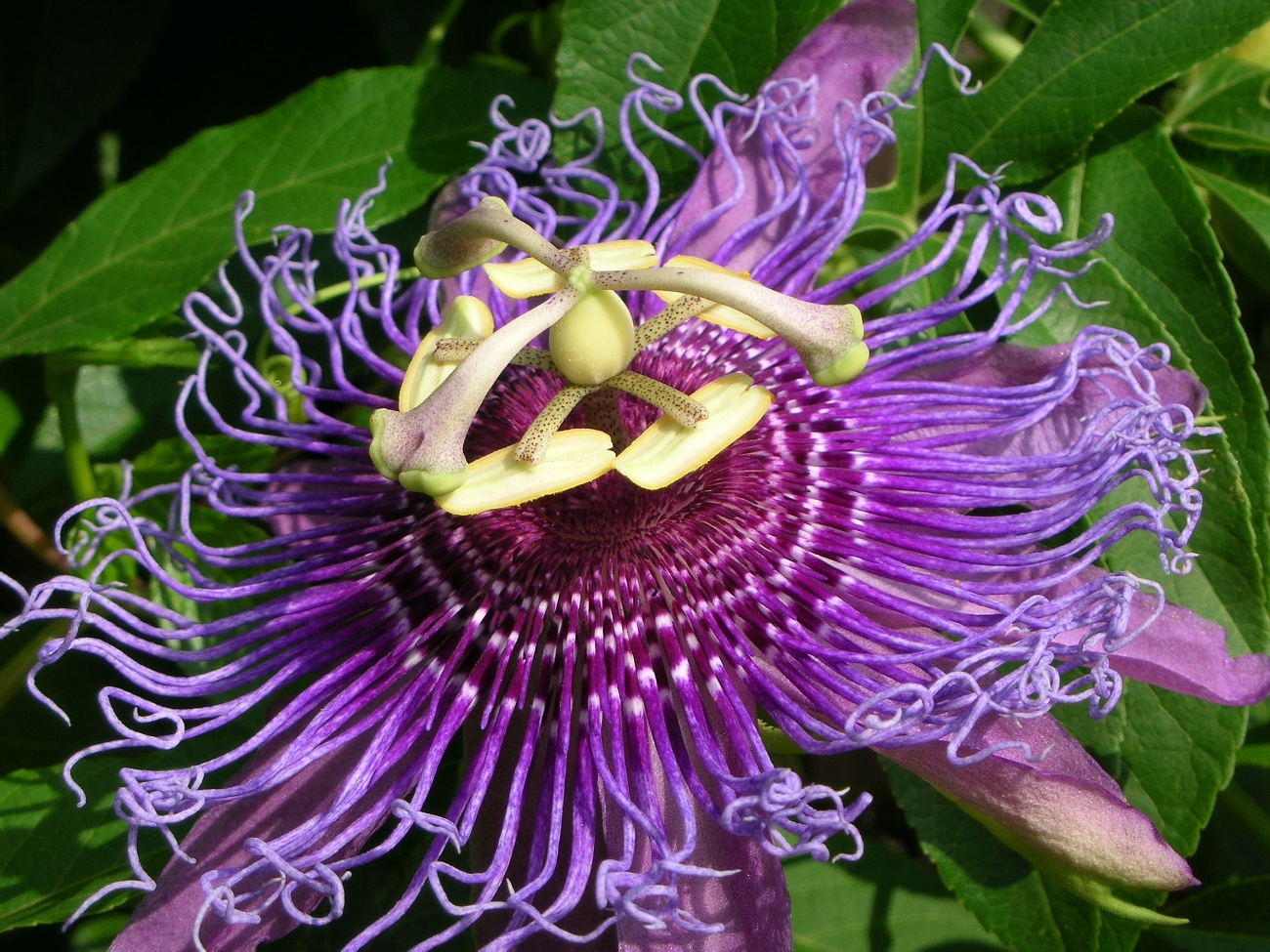
La Flor de la Pasión es también conocida como Pasionaria, Passion Flower, Maracuiá, Maracoc, Passiflora, Granadilla. Su género es Pasiflora, y es una trepadora que crece naturalmente utilizada como sedativo para el tratamiento de insomnio y desórdenes nerviosos. La planta es indígena del Sureste de EEUU hasta Argentina y Brasil. En Sudamérica hay aproximadamente un 95% de sus 500 especies conocidas. Es una planta vigorosa, que trepa rápidamente y provee sombra, color, néctar y fragancia todo el año. Las mariposas son atraídas por su néctar y polen.
Hay docenas de viñas de pasión, comestibles y no comestibles. La más popular es la Passiflora Edulis. Su fruto se come fresco o en bebidas, pasteles, mermeladas y helado.
Europa debe esta viña a Colón. Su flor debe haber presentado un fascinante cuadro a los misioneros. Del libro de Lesley Gordon ¨Green Magic¨, aprendemos que en su celo religioso, los españoles vieron en esta flor un símbolo otorgado por Dios acerca de la Pasión de Cristo, que reverenciaba el triunfo de la cruz. Cada parte de la flor, desde la hoja hasta el tallo, parecía estar diseñada para este propósito. Fue enseñado a los nativos que la hoja era el símbolo de la lanza, y las cinco anteras, las cinco llagas; de este modo, los mexicanos conversos la llamaron ¨Flor de las Cinco Llagas¨. Los zarcillos eran como los látigos, y la columna del ovario, el pilar de la cruz. Los estambres simbolizaban los martillos y los círculos oscuros en el dramático centro de la flor, la corona de espinas. El cáliz representaba el nimbo y las flores blancas denotaban pureza, mientras que las azules, el cielo. Los tres días que dura la vida de la flor significaban ¨El Hijo del Hombre estará tres días y noches en el hogar de la Tierra¨.
Europa debe esta viña a Colón. Su flor debe haber presentado un fascinante cuadro a los misioneros. Del libro de Lesley Gordon ¨Green Magic¨, aprendemos que en su celo religioso, los españoles vieron en esta flor un símbolo otorgado por Dios acerca de la Pasión de Cristo, que reverenciaba el triunfo de la cruz. Cada parte de la flor, desde la hoja hasta el tallo, parecía estar diseñada para este propósito. Fue enseñado a los nativos que la hoja era el símbolo de la lanza, y las cinco anteras, las cinco llagas; de este modo, los mexicanos conversos la llamaron ¨Flor de las Cinco Llagas¨. Los zarcillos eran como los látigos, y la columna del ovario, el pilar de la cruz. Los estambres simbolizaban los martillos y los círculos oscuros en el dramático centro de la flor, la corona de espinas. El cáliz representaba el nimbo y las flores blancas denotaban pureza, mientras que las azules, el cielo. Los tres días que dura la vida de la flor significaban ¨El Hijo del Hombre estará tres días y noches en el hogar de la Tierra¨.

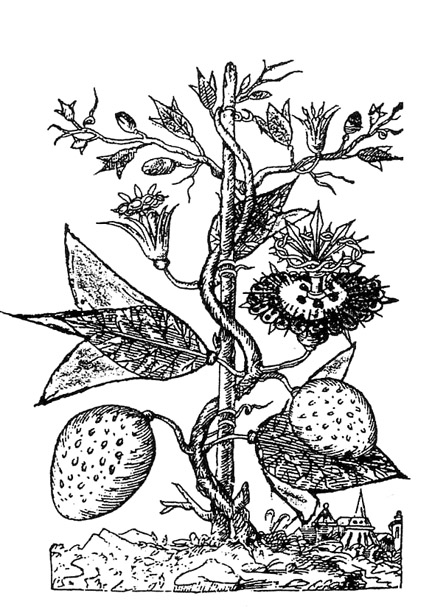
Dibujo de Johann Zahn (1631- 1707), Crédito de the National Oceanic and Atmospheric Administration Library in Silver Spring, Maryland del rare Zahn book. www.flwildflowers.com/clues/

Dibujo del monje dominicano Simone Parlasca's en un panfleto de 1609.http://www.flwildflowers.com/clues/parlasca1609.jpg
Y así fue llamada Flos-passionis, cambiada por Linneo a Pasiflora, la Flor de la Pasión. De esta manera fue venerada en Sudamérica, y las monjas las tenían rodeando las ventanas de sus dormitorios.
La flor color carne, P. Incarnata, ha sido la primera especie conocida en Europa, y fue introducida a Inglaterra en 1629; la más común de color azul, P. Caerula, arribó en 1690. Para el SXVIII las leyendas de las flores perdieron su simplicidad. Ellas permanecieron morales pero muy irreales. El simbolismo religioso asociado con la iglesia católica disminuyó con el avance del Protestantismo y el advenimiento del pensamiento científico.
Otras plantas exóticas fueron encontradas en América. Y así la alegoría de la Crucifixión fue imaginada en las raíces, tallos, tubérculos de otras especies. La metáfora religiosa en botánica fue parte del imaginario de la conquista Española en pos de transmitir la fe católica a los indígenas.
La belleza de la Flor de la Pasión ha sido plasmada en arquitectura, en ornamentos como tallados, vitreaux, manualidades en general, hierro forjado, entre otros diseños.
Otras plantas exóticas fueron encontradas en América. Y así la alegoría de la Crucifixión fue imaginada en las raíces, tallos, tubérculos de otras especies. La metáfora religiosa en botánica fue parte del imaginario de la conquista Española en pos de transmitir la fe católica a los indígenas.
La belleza de la Flor de la Pasión ha sido plasmada en arquitectura, en ornamentos como tallados, vitreaux, manualidades en general, hierro forjado, entre otros diseños.
REFERENCIAS
http://www.virtualherbarium.org/GardenViews/passionvines.html
Abrams, Michael E. Clues to the mystery:
Early passion flower depictions compared to Joos van Cleve's
'Mystery Artist' Madonna; a 1640s painting by Albert Eckhout;
some interesting history about the early herbals and authors
www.flwildflowers.com/clues/
Gordon, Lesley. Green Magic . 1977
Abrams, Michael E. Clues to the mystery:
Early passion flower depictions compared to Joos van Cleve's
'Mystery Artist' Madonna; a 1640s painting by Albert Eckhout;
some interesting history about the early herbals and authors
www.flwildflowers.com/clues/
Gordon, Lesley. Green Magic . 1977